NAVARA KIZHI
Shashtika Shali Pinda Sweda (Herbal Rice Poultice Therapy)
Navara Kizhi is the name used in Kerala for Shashtika Shali Pinda Sweda. The name is literal: "Shashtika" means sixty, "Shali" means rice, "Pinda" means bolus, Sweda" means sudation - a sixty-day-harvest rice bolus used to induce sweating.
This procedure uses Shashtika Shali (a special type of rice harvested in 60 days and exclusively used for Ayurveda treatments), which is processed in herbal decoctions and milk. The rice is cooked in a decoction of Bala and milk "until the consistency becomes similar to Payasa" (a milk pudding), then formed into boluses which are "kept in the decoction mixture of Bala and milk in the vessel being continuously heated", and "sufficient heated bolus is massaged all over the body for sudation after Abhyanga with medicated oil
This strengthening treatment gives nutrition to the tissues which are undergoing depletion and degeneration. It also has an extraordinary relaxing and analgesic effect. This is a time-tested treatment administered to those ailing from musculoskeletal and neuromuscular diseases. Navara Kizhi is traditionally used to ease joint and muscle pain and stiffness.
Navara Kizhi Preparation
Balamula (the root of Sida Cordifolia) is thoroughly washed with sterile water to remove dirt and impurities. The roots are then cut into small pieces and put in a vessel containing water. This mixture is boiled until the quantity is reduced to a quarter of the initial quantity. The resultant liquid is then strained to obtain a decoction of Bala Kwath (Sida Cordifolia root decoction).
This decoction is divided into 2 equal parts. Milk and rice are added to one part and cooked. After cooking thoroughly, the mixture is ground until softened. The other half of the decoction is added to milk and heated on a low flame.
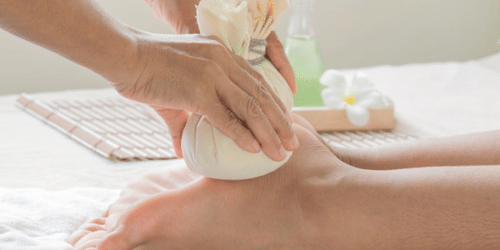
To make the poultice, several pieces of sterile cloth are cut into circular dimensions. The cooked rice is divided and put onto each piece of cloth. These are tied into poultices tightly bound by strong threads. It is important that the poultices are wrapped tightly so that hand gripping is easy during treatment.
Navara Kizhi Procedure
Purva Karma (Pre-treatment)
The treatment begins with abhyangam (oil massage) followed by Amalaki Tala-dharana. A paste made by boiling amla in buttermilk is applied on the crown of the head and tied with a bandage. A well-like structure is made with the paste and filled with coolant oils like Chandanabala Lakshadi Tailam.The Shashtika Shali Pinda Sweda procedure involves the application of heat to the body for more than an hour. The heat might affect the brain and the sense organs, so Amalaki Tala-dharana protects these organs by providing a cooling effect on the mind and body.
Pradhan Karma (Procedure)
Navara Kizhi is performed by 4 attendants or masseurs (2 on each side of the body) who work in a synchronized manner. The poultices are dipped in the heated medicated milk and are rubbed and stroked on both sides of the patient’s body in a rhythmic way. The strokes are given in a clockwise manner covering all the joints in the body in a downward direction from the nape of the neck to the lower back and from the hips towards the feet.The poultices are replaced with fresh warm ones once they cool.
This procedure must be performed continuously without any interruption. Each session of this procedure takes about 70 to 105 minutes while the duration of the treatment may vary from 7 to 21 days depending on the severity of the condition.
Paschat Karma (Post-treatment)
After the procedure, the poultices are opened and the rice is rubbed gently over the patient’s body for 10-15 minutes. This is wiped off with a tissue or sterile cloth. The Tala-dharana is also slowly removed and the head is wiped off with a sterile cloth. The patient’s body is sponged with hot water to remove the oil from the body and head, followed by a hot water shower.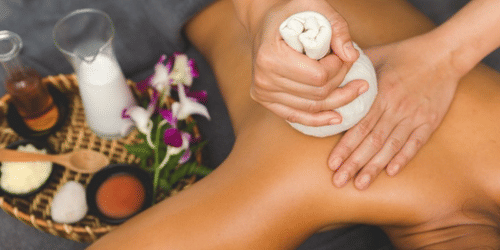
Precautions
- Poultices should not be too hot.
- This procedure should be performed only under the supervision of an expert therapist.
- If the patient develops excessive sweating, treatment should be stopped to avoid dehydration.
Contraindications
- This treatment is not recommended for patients with diabetes unless the benefits outweigh the risks.
- High blood pressure – treatment can be done for local problems in joints and soft tissues but only under the supervision of a trained expert.
- Severe varicosity of veins
- Deep vein thrombosis
- Fractures
- Fever
- Severe inflammation
Benefits of Navara Kizhi
- Helps in preventing the degeneration of joint tissues and wasting of muscles
- Provides lightness in the joints, soft tissues, and muscles by inducing sweat
- Corrects morbidity associated with Vata and Pitta doshas
- Enhances flexibility and movement of joints
- Enhances skin color and complexion by improving blood circulation in the skin
Limitations of Navara Kizhi
The Shashtika Shali Pinda Sweda is one of the best Ayurvedic treatments because it provides relief from sciatica and other conditions that cause pain and stiffness in joints and muscles. It relieves stress, provides good immunity, and is also highly nutritious.
While it is beneficial for these ailments, it should be noted that it is not the sole remedy. In some cases, disease-modifying drugs and/or compounds must be taken for better relief. Some oral medications which enhance strength and stability should also be included.
Advisory Note
As with all Ayurvedic treatments, the Navara Kizhi must be performed by a trained Ayurvedic therapist under the supervision of an Ayurvedic doctor.
Related Links
- https://easyayurveda.com/2016/02/04/navarakizhi-shashtika-shali-pinda-sweda-procedure-benefits/
- https://www.ayurtimes.com/navarakizhi-shashtika-shali-pinda-sweda/
Glossary
- Abhyanga / Abhyangam = warm-oil massage over the whole body
- Kizhi = a cloth bolus (pouch) pressed on the body while hot
- Navara / Shashtika Shali = rice harvested in sixty days
- Pinda = a bolus, i.e. a tied cloth pouch
- Payasa = a milk-and-rice pudding
- Bala = Sida cordifolia, a herb whose Sanskrit name means strength
- Sweda / Swedana = sweating brought on deliberately as part of the treatment
- Dosha = one of the three functional types Ayurveda uses to classify imbalance
- Vata = the dosha associated with movement
- Pitta = the dosha associated with heat and digestion
- Purva Karma = the preparation phase before the main procedure
- Sudation = sweating (jargon - replace it with the plain word)
BLOG
Podikizhi (Herbal Powder Poultice Therapy)
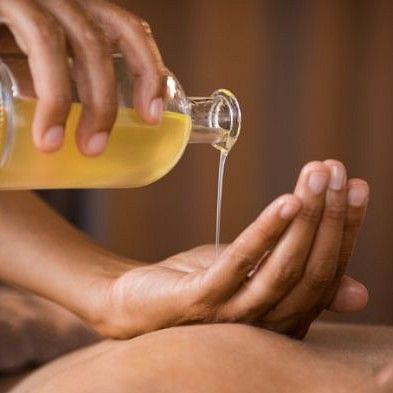
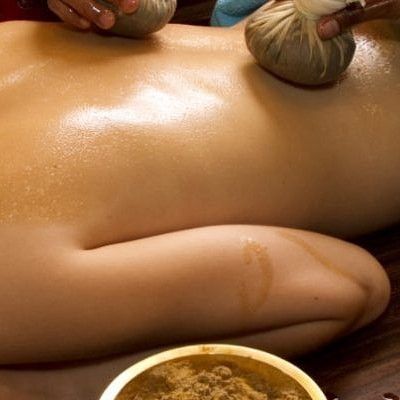
Among the many ancient practices of Ayurveda, one effective form of treatment is the Podikizhi, also known as Choorna Swedam. This sweat-inducing Ayurveda technique involves fomentation, sudation, and steaming treatments.

GET IN TOUCH
Please take a moment to fill out the form below with your contact information. A YO1 Longevity & Health Resorts representative will reach out to you with additional information.