
GREEVA VASTI
Herbal Neck Pain Therapy
Last Updated on 17 September, 2026
How Greeva Vasti Works
Greeva Vasti operates through Sweda (sweating) and falls under the Panchakarma strain of treatments. Sweda is performed with the help of warmed medicated oil held in a container and placed at the spot of discomfort on the back of the neck. The sustained warmth helps the muscles around the area release.
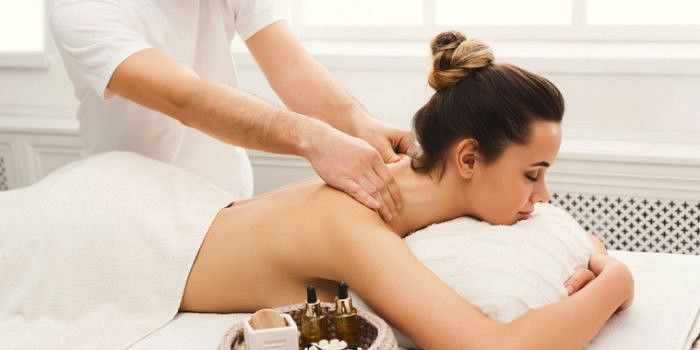
After this procedure, Abhyanga (massage) is lightly performed on the patient.
Greeva Vasti is done in the morning if kapha dosha is dominant (neck stiffness), in the noon if pitta predominates (burning sensations or inflammation), and if vata is dominant (pain), then treatment is performed in the evening. With these factors being considered, Greeva Vasti is generally performed early in the morning.
The oils used in Greeva Vasti and in the Abhyanga massage are Ksheerabala tailam, Mahamasha tailam, Mahanarayana tailam, Kottamchukkadi tailam, Balashwagandhadi tailam, Ashwagandhabalalakshadi tailam, Sahacharadi tailam, Murivenna, Pinda tailam, Tiktaka ghritam, and Til tailam (sesame oil).
The performance of Greeva Vasti on an empty stomach is preferable because the patient will have to lie face down (prone) for a significant amount of time.
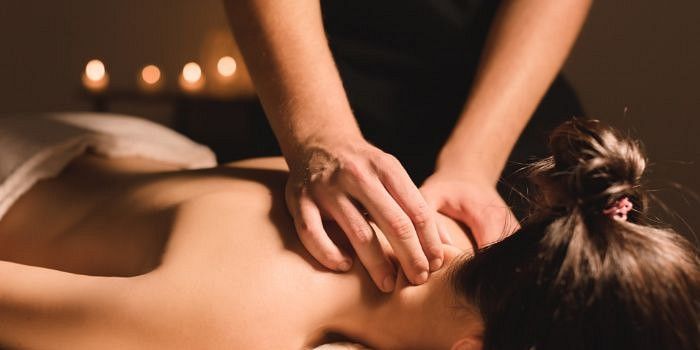
How the Oil is Held on the Neck
The detail that surprises most first-time guests is that nothing manufactured holds the oil in place. Black gram flour is kneaded with water into a stiff, putty-like dough, then rolled and shaped by hand into a low wall on the back of the neck while you lie face down. The wall is pressed down at its base so it seals against the skin.
Warm oil is poured into the well this creates and left to sit. As it cools it is lifted out with a cotton swab and replaced with oil at the right temperature, so the heat stays steady for the whole treatment. The practitioner tests every pour on their own wrist first. At the end the dough is lifted away in one piece.
What a Session Feels Like
You lie face down on a treatment table with your forehead supported and your arms at your sides. The room is warm and quiet. The first sensation is the cool, slightly heavy press of the dough being shaped, followed by spreading warmth as the oil goes in.
The warmth is steady rather than hot, and the stillness is the point. There is nothing to do for the next half hour or so but stay put. People who carry tension in the neck and shoulders often notice the muscles releasing in stages rather than all at once. The light massage that follows is far gentler than a standard deep-tissue treatment.
Why Is Greeva Vasti Important?
Greeva Vasti is used to ease neck pain and stiffness, and many people find the relief lasts well beyond the session itself.
Greeva Vasti is traditionally used, alongside medical care, to ease neck and shoulder symptoms associated with:
- Cervical spondylosis
- Whiplash
- Sprains and strains
- Tension and headaches
- Wry neck (Torticollis)
- Rheumatoid arthritis
- Ankylosing spondylitis
- Fibromyalgia
- Spinal stenosis
- Slipped herniated disc
The benefits of Greeva Vasti are:
- Relief from pain and stiffness in the neck, shoulders, and upper limbs
- Relief from pain and inflammation
- Improvement of neck mobility
- Increased blood supply to the neck, shoulders, and arms
- Reduced frequency of headaches and dizziness
Purvakarma
Purvakarma, which is the preparation prior to actual treatment, involves a thorough examination of the patient. The Prakriti (the basic vitals of the body) and Vikriti are examined in detail. The disease is then observed and diagnosed. After this, it is determined whether the Greeva Vasti is the suitable treatment for the condition.
The materials needed for the treatment are medicated oils, medicated ghee, a bowl to store the oil, water, black gram flour, sterile cloths, and herbal powders.
The herbal powders used in Churna Pinda Sweda (powder bolus fomentation), before Greeva Vasti are Rasnadi Churna, Kottamchukkadi Churna, Jatamayadi Churna, Ellumnishadi Churna, Grihadhoomadi Churna, and Kolakulattadi Churna.
Paschatkarma
How Many Sessions Are Usually Needed
One session is pleasant and often loosens a stiff neck for a day or two. Traditional practice treats it as a course, typically running daily over seven to fourteen days, with the oils reviewed as the course goes on. Long-standing complaints are expected to respond gradually. If you are booking around a stay, it is worth planning the sessions across consecutive days rather than spacing them out.
Who Should Not Have Greeva Vasti
Warm oil therapies suit most people, but there are situations where the treatment should wait:
- Fever, an active infection, or acute indigestion
- Broken skin, a rash, burns or an infection anywhere on the neck or upper back
- A recent neck injury, or neck pain that followed a fall or collision, until it has been assessed
- Neck pain with numbness, weakness or pins and needles running down an arm, which needs medical review first
- Pregnancy, unless the position and the treatment have been specifically adapted
- Uncontrolled high blood pressure, or a heart condition currently being managed
Lying face down for a long stretch is itself the limiting factor for some people. Say so in advance if it is uncomfortable for you, and speak to your own doctor about anything on this list.
Looking After Your Neck Between Sessions
Therapy works better when the thing causing the strain eases off too. A few adjustments make a measurable difference to most desk-related neck pain:
- Raise your screen so the top of it sits at roughly eye level, and bring it close enough that you are not leaning in
- Get up every 30 to 40 minutes, even briefly. Static loading tires neck muscles faster than movement does
- Take phone calls on speaker or a headset rather than wedging the handset against your shoulder
- Use one pillow that keeps your head level with your spine, not a stack that pushes it forward
- Move the neck gently through its full range each morning rather than stretching hard into pain
Conclusion
Greeva Pichu at YO1
YO1's Ayurveda menu includes Greeva Pichu, a 45-minute neck therapy that works on the same principle of sustained warm oil held over the area. A thick cotton pad is soaked in warm medicated oil, laid over the neck, and replaced as it cools. It is used for neck pain and stiffness, muscle spasm, spondylosis and shoulder tension. Guests meet a Health Counselor at the start of a stay who works out which therapies fit what they have come for, and treatments are delivered by trained practitioners.
Reference Links
- https://easyayurveda.com/2016/01/03/greeva-basti-benefits-method/
Glossary
- Abhyanga / Abhyangam = warm-oil massage over the whole body
- Pinda = a bolus, i.e. a tied cloth pouch
- Sweda / Swedana = sweating brought on deliberately as part of the treatment
- Vasti / Basti = a ring of dough that holds warm oil on one spot; in Panchakarma the same word means a medicated enema
- Greeva = the neck
- Dosha = one of the three functional types Ayurveda uses to classify imbalance
- Pitta = the dosha associated with heat and digestion
- Kapha = the dosha associated with structure and fluid
- Panchakarma = a five-procedure cleansing programme
- Purva Karma = the preparation phase before the main procedure
- Churna = herbal powder
- Ghee / Ghrita = clarified butter
- Spondylitis = inflammation of the joints of the spine
- Spondylosis = age-related wear in the spine
- Fomentation = warming
Frequently Asked Questions
1. How long does Greeva Vasti take?
The oil is held on the neck for around 45 minutes. With preparation, the light massage afterward and a bath, allow closer to 90 minutes in total.
2. Does it hurt?
It should not hurt. The oil is warm rather than hot, and it is tested before every pour. Tell the practitioner immediately if the temperature is uncomfortable, as it is easily adjusted.
3. Why is it done on an empty stomach?
You spend a long stretch lying face down, which is unpleasant after a meal. Leaving one to two hours after eating is the usual advice.
4. Is Greeva Vasti the same as a neck massage?
No, they work differently. A massage applies pressure and movement, while Greeva Vasti holds warm medicated oil still against the area for a sustained period. The gentle massage comes afterward.
5. Can it help a desk-related stiff neck?
That is one of the more common reasons people try it, and the sustained warmth does tend to release tight muscles. It works best combined with changes to how you sit and how often you move.
Blog
Shiro Vasti (Herbal Oil Head Bath Therapy)
The head is an integral component of our bodies and runs the administrative system in the most efficient way. What would happen if this system were to fall out of balance?
Merudanda Vashti (Herbal Spinal Treatment)
Merudanda Vashti is very similar to the process of Netra Tarpana. Medicated and aromatic oils are poured on the entire spine region within the boundary of a paste made of a mixture of herbal powder and water.

Greeva Pichu (Ayurvedic Neck Massage Therapy)
Pichu therapy is one Ayurvedic treatment method that is helpful in treating body pains and Greeva Pichu is the Ayurvedic treatment for neck pain.
Get in Touch
Press Coverage



Connect with Us, Start Your Journey
+1 845 237 9100 | Mon - Sun 9:00 AM to 9:00 PM
Book Your Stay