- Ayurveda: A Practical Guide to the Science of Self-Healing
- How to Reset Your Nervous System Naturally
- International Yoga Day 2026 with YO1
- How to Reset Your Mind and Body This Memorial Day
- Why You Wake Up Tired Even After Sleeping
- How to Spend Memorial Day Weekend Focusing on Your Well-Being
- Why a Wellness Retreat is the Perfect Mother’s Day Gift
- Why Acupuncture Is Trending in Holistic Wellness Resorts
- Your Body is Speaking
- Why Wellness Retreat is the New Luxury Vacation in 2026
- What Happens When You Practice Yoga Consistently for 30 Days
- Feeling Burnt Out? How a Wellness Retreat Can Help You Reset Mind and Body
- How Just 15 Minutes of Daily Yoga Can Transform Your Routine
- Why Spring Is the Perfect Time to Begin Your Wellness Journey
- 5 Benefits of Yoga for Mind and Body
- Can Your Diet Help Improve Dull Skin?
- Acupuncture for Skin Health and Natural Glow
- How Mud Therapy Helps Detox the Body Naturally
- Ayurvedic Daily Routine for Modern Living
- Can Naturopathy Help with Stress and Burnout?
- Is Acupuncture Painful? What You Should Know
- Best Women’s Day Wellness Retreat in New York
- Looking for the Best Wellness Resort in New York? Here’s What to Know
- How Yoga Helps Reduce Stress and Improve Focus
- Where Valentine’s Meets Wellness
- A Wellness Experience at YO1
- Daily Practices to Calm Anxiety
- Holiday Wellness Guide: Staying Fit Through Christmas and the New Year
- Top Winter Wellness Rituals Backed by Ayurveda and Modern Science
- 7 Reasons to Discover Ultimate Serenity with Naturopathy
- Embrace Wellness Winter
- 7 Wellness Tips For Your Longevity
- World Mental Health Day: Essential Insights for Balanced Life
- 5 Ways to Achieve Optimal Digestive Health
- Exploring the Health Benefits of 5 Popular Types of Massages
- How Spas Rejuvenate the Body, Mind, and Soul
- What is Swedish Massage
- Valuka Sweda
- Januvasti
- Annalepam
- Navara Kizhi
- Shiro Vasti
- Udhwarthanam
- Podikizhi
- Pizhichil
- Upanaham
- Merudanda Vashti
- Netra Tarpana
- Greeva Pichu
- Greeva Vasti
- Merudanda Pichu
- What is Ayurveda?
- The Benefits of Practicing Ayurveda
- Ayurveda: An Alternative Medicine
- Techniques and Benefits of Shiro Abhyanga in Ayurveda
- The Ayurvedic Cleanse of Panchakarma
- How Padabhyangam Therapy Heals Your Body and Mind
- Elements in Ayurveda and their Significance
- Live The Tranquil Life
- Detox and Rejuvenate with Acupuncture
- Lifestyle Management with Yoga and Meditation
- A Unique Approach To A Healthy Diet
- Weight Management with Ayurveda
- Wellness Retreats to Celebrate Women's Day
- Best Stress Relief Techniques
- Benefits of Massage Therapy
- 10 Quick & Easy Fresh Juice Recipes
- Everything you need to know about Holistic Health Assessment
- Essence of Yoga
- Why Must You Practice Yoga Regularly?
- The Basics of Ayurveda
- Boost Your Immunity With Naturopathy Amidst The Pandemic
- 5 Ways To Bring Down The Risk Of Seasonal Diseases
- 5 Amazing Tips To Improve Your Immunity
- 4 Everyday Habits That Might Be Harming Your Gut Health
- Reiki: The Healing Touch
- Your Ultimate Guide To Chakra Meditation
- Embrace the Naturopathic Way of Life
- Best Therapies for Chronic Neck Pain
- 4 Things Not To Do After A Filling Meal
- 8 Things That Weaken Your Immune System
- Try These 12 Things to Beat Panic and Stay Calm
- Beat Stress With These Foods During COVID-19
- Diet and Depression: What to Eat, What to Avoid
- Is Depression Keeping You Sedentary? Here is what you can do
- A Low FODMAP Diet For Better Digestive Health
- Want to Increase Sperm Count? Go the Nature's Way
- Home Remedies to Manage your PCOS
- Try Ayurveda to get pregnant faster
- Try Fertility Yoga to Support Reproductive Health
- Should You Ditch Dairy Products For Weight Loss?
- 6 Principles of naturopathy you should know about
- 9 Home Remedies For Digestive Issues
- Ayurvedic Remedies to treat COVID-19
- Importance of Doshas
- Acupuncture: The perfect healing therapy to boost fertility
- Fighting COVID-19 with Ayurveda
- Practice yoga to boost mental health during COVID-19
- What to do when taking a deep breath just isn't enough
- Four Things To Gift Your Dad This Father’s Day
- Simple Steps To Spend Your 4th Of July Weekend
- 5 Amazing Things to Do During This Fall When You Plan Your Trip
- 4 Therapies for women dealing with stress & anxiety
- Importance of Ayurvedic Treatment in The Modern World
- What is Naturopathy & how does it benefit you?
- 10 Winter Wellness Tips For Your Health
- Weekend Getaways & Health Benefits
- The Importance Of Having Corporate Retreats
- 6 Habits to Consider in New Years Resolutions
- 5 Tips to Welcome Healthy Spring Season
- 6 Wellness Tips to Reignite the Spark of Love this Valentine Day
- 6 Wellness Tips for Longevity
- Catskills Most Sought Destination for Wellness Lovers
- 5 Springtime Wellness Tips
- How Detoxing Your Body Can Contribute to Your Holistic Wellbeing
- Unlock Secrets of Longevity with Spring Rejuvenation
- World Health Day: 6 Ways To Embrace The Power of Good Health
- Things To Do Around The Bethel Woods Center of Arts
- 5 Healthy Habits to Attain Longevity
- Mother's Day Give Her Gift of Wellness
- How To Deal With Anxiety and Depression
- Yoga For Beginners
- Benefits Of Shirodhara Therapy To Restore Your Wellbeing
- Stress Taking A Toll On Your Health?
- How a Wellness Retreat Can Help You Get Through Panic Attacks
- Elevating Your Mind, Body, and Soul with Effective Wellness Programs
- Unlock the Secret to Restful Nights: YO1's Insomnia Management Program
- Tips for a Healthier Labor Day Weekend
- 5 Ways to Unlock Optimal Health and Wellness
- World Vegetarian Day Health Benefits
- Catskills Resort Perfect Wedding Venues
- Stress Management Program for Mind Body
- Role of Healthy Diet in Longevity
- Enhancing Couple Wellness this Valentine Day
- 6 Anxiety Management Tips
- Wellness Benefits of Spa Treatments
- Womens Wellness Retreat A Step by Step Guide
- Weight Management Why It Matters
- Tips for Spring Season
- Self Care Simple Strategies
- 7 Spring Season Foods to Boost Health
- How Yoga Can Improve Physical and Mental Health
- Top Natural Remedies for Spring Allergy Relief
- How Hydrotherapy Impact the Mind and Body
- Tips For Managing Daily Anxiety and Stress
- 10 Nutritious Foods to Manage Type 2 Diabetes
- Meditation Techniques to Calm Anxious Mind
- What to Expect During the Ayurvedic Detox Program?
- Top 10 Benefits of Acupuncture Therapy
- YO1 Resorts Featured in Smile 2 Movie
- Bethel Woods Center for the Arts: All You Need to Know
- Everything You Need to Know About Deep Tissue Massage
- Ways to Celebrate Labor Day
- Best Wellness Resorts in Catskills New York
- 5 Common Myths About Weight Management
- Luxury Recovery at YO1 for Spartans Race
- Meet Dr. Anu Bharadwaj
- Yoga Retreat in New York
These doshas keep the human body, mind, and emotions in balance. A disease is manifested when the delicate balance between the doshas is disturbed. An Ayurvedic cleanse draws out the toxins from the body, also drawing out excess vata, pitta, and kapha from the tissues into the digestive tract in order to eliminate them. This, in turn, unblocks the channels and restores balance. This cleanse is known as Panchakarma, which literally means five actions or procedures.
The name refers to five distinct purification procedures, each directed at a different dosha, and each requiring medical preparation and supervision. Panchakarma is never the five procedures alone. It is preceded by Purva Karma — Snehana (oleation) and Swedana (sudation) — and followed by Paschat Karma, a graded return to normal diet called Samsarjana Krama. It is a method of cleansing the body of all unwanted waste after lubricating the body. This treatment is highly beneficial as it includes preventive and curative actions for various diseases.
Benefits of Panchakarma
- Cleared toxins from the entire system
- Balanced doshas
- Healed digestive system
- Enhanced immunity
- Decreased stress
- Anti-aging
- Improved skin lustre
- Weight-loss (if overweight)
- Deep relaxation
- Meditative outlook on life
- Enhanced mindfulness
Panchakarma Treatment Procedure
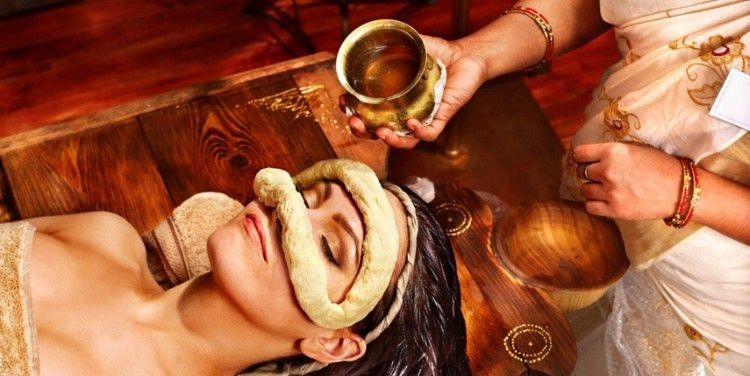
The complete process of Panchakarma involves the following three steps:
1. Poorva Karma
This is a preparatory procedure required before the main treatment, to soften the tissues so that the lipid-soluble toxins deposited into them are liquefied and flow back into the digestive tract. From here, they can be eliminated. This treatment prepares the patient mentally and physically for the main procedure of Panchakarma.
It involves three procedures:
- Pachan Karma – improves digestion with herbs and fasting so that the patient can digest the ghee (clarified butter) which is provided to liquefy the fat-soluble toxins.
- Snehan Karma – medicated ghee is given to the patient in increasing doses in order to aggravate and liquefy the fat-soluble toxins deposited in the deep tissues.
- Swedan Karma – a full body steam bath is given to the patient thereby opening up the body channels and allowing the heat to liquefy the toxins further. This facilitates their movement from the tissues to the digestive tract.
2. Pradhan Karma
This is the Panchakarma, a five-step procedure which is highly individualized depending on the needs, age, digestive strength, immune system, and other factors. This intense Panchakarma procedure can only be done under the guidance of an Ayurvedic practitioner.
The five karmas to cleanse the complete body are:
- Vamanam (therapeutic emesis) – targets kapha. It is defined as a "procedure in which Doshas (waste products or toxins) are eliminated through upper channels i.e. mouth". A supervised, medically induced emesis clearing the stomach and upper airway. Published protocols exclude anyone with hypertension, diabetes, renal disease, peptic ulcer, jaundice, acute infection or dehydration.
- Virechanam (therapeutic purgation) – targets pitta. Medicated purgatives clear the small intestine. In a published trial the whole sequence ran: deepana-pachana (digestive herbs) 2-3 days, snehana (oil loading) 3-7 days, external therapies 3 days, then the purgation itself, then samsarjana krama (staged re-feeding) 3-7 days — roughly 11 to 20 days end to end for one of the five procedures.
- Basti (medicated enema) – targets vata. Given in two alternating forms: niruha (decoction-based) and anuvasana (oil-based). The typical Kala Basti schedule is 16 applications: 6 Niruha and 10 Anuvasana.
- Nasyam (nasal administration) – medicated oil, ghee or powder given through the nostrils, for conditions above the collarbone: head, sinuses, throat, eyes, ears.
- Raktamokshana (therapeutic bloodletting) — removal of a controlled quantity of blood, for conditions attributed to vitiated blood and pitta. Done by leech application, vein puncture or cupping.
3. Paschaat Karma
This is a post-therapy dietary regime to restore the body’s digestive and absorptive capacity to its normal state. It includes rejuvenating treatments, lifestyle management, diet management, and intake of herbal supplements.
It includes the following procedures:
- Sansarjan Karma – food therapy after detoxification, which aims at gradually increasing the patient’s diet from liquids to semi-solids to a normal diet.
- Rasayan Adi Prayogam – a rejuvenating rasayan therapy which aids in increasing natural immunity and enhancing your general well-being.
- Shaman Chikitsa – a pacification therapy with herbs and lifestyle management.
It is important to note that a Panchakarma procedure is designed specifically for an individual after a thorough physical examination and pulse diagnosis. Hence, there is no universal package for everybody. Traditional Panchakarma is delivered over a minimum of two weeks and more usually four, in a retreat or hospital setting.
Who Needs Panchakarma?
Panchakarma Side Effects and Who Should Avoid It
Common side effects of Panchakarma include fatigue, malaise, headaches, congestion, and general illness. An initial increase in the symptoms may also occur as a side effect. It is also important to note that as Panchakarma seeks to release stored emotional problems, some patients can experience mental disturbances and depression during the course of treatment.
Because these are active purification procedures, published clinical protocols screen participants out rather than in. A Vamana study excluded anyone with hypertension, diabetes, renal disease, peptic ulcer, jaundice, acute infection or dehydration. Then: pregnancy, children and the elderly, and anyone on prescription medication should be assessed by a physician first.
Panchakarma treatments should only be performed by qualified and experienced Ayurvedic practitioners.
References
- Gupta B, Mahapatra SC, Makhija R, Kumar A, Jirankalgikar NM, Padhi MM, Devalla RB. "Physiological and biochemical changes with Vamana procedure." Ayu. 2012;33(3):348-355. doi:10.4103/0974-8520.108821
- Shukla G, Bhatted SK, Dave AR, Shukla VD. "Efficacy of Virechana and Basti Karma with Shamana therapy in the management of essential hypertension: A comparative study." Ayu. 2013;34(1):70-76. doi:10.4103/0974-8520.115455
- Conboy LA, Edshteyn I, Garivaltis H. "Ayurveda and Panchakarma: Measuring the Effects of a Holistic Health Intervention." ScientificWorldJournal. 2009;9:272-280.
- http://vikaspedia.in/health/ayush/ayurveda-1/panchakarma#section-2
- https://www.encyclopedia.com/medicine/encyclopedias-almanacs-transcripts-and-maps/panchakarma
Glossary
- Abhyanga / Abhyangam = warm-oil massage over the whole body
- Shiroabhyangam / Shiro Abhyanga = head and scalp oil massage
- Padabhyanga / Padabhyangam = foot massage
- Shirodhara = a steady stream of warm oil poured across the forehead
- Sweda / Swedana = sweating brought on deliberately as part of the treatment
- Snehana = oiling the body, inside and out
- Vasti / Basti = a ring of dough that holds warm oil on one spot; in Panchakarma the same word means a medicated enema
- Dosha = one of the three functional types Ayurveda uses to classify imbalance
- Vata = the dosha associated with movement
- Pitta = the dosha associated with heat and digestion
- Kapha = the dosha associated with structure and fluid
- Panchakarma = a five-procedure cleansing programme
- Vamana = therapeutic vomiting
- Virechana = purgation
- Raktamokshana = bloodletting
- Purva Karma = the preparation phase before the main procedure
- Deepana / Pachana = herbs that stimulate appetite and digestion
- Ghee / Ghrita = clarified butter
- Sudation = sweating
- Oleation = oiling
GET IN TOUCH
Please take a moment to fill out the form below with your contact information. A YO1 Longevity & Health Resorts representative will reach out to you with additional information.
BOOK YOUR HEALTH PROGRAMS AND THERAPIES NOW
We welcome the opportunity to assist you. If you would like to learn more about the health programs or therapies offered at YO1, please contact us to speak directly with a YO1 Longevity & Health Resorts representative.